Case Studies
The best solutions often look obvious in hindsight - but only once someone has thought differently enough to find them.
Our case studies show what happens when we step back from the obvious answer and explore the problem more deeply.
In each case, the breakthrough came not from trying to find a better answer to the original question, but from asking a different question altogether. The people who came to us with the problem were often surprised by where the solution ultimately came from.
The Approach
Across these cases, our work has involved challenges in technology, engineering, buildings and wider systems. While each situation is different, the underlying approach remains consistent:
- Understanding the problem as it is presented by the client.
- Exploring the wider context.
- Identifying what is really driving the challenge.
- Developing a shared understanding.
- Creating a practical way forward.
Please note:
- Case Studies - show how a specific challenge was approached and the results.
- Demonstrations - provide an opportunity to experience or explore the thinking and approach itself.
Selected Case Studies
Cassava Pressure Measuring | Energy Efficient Revolving Door | Cacao Beans Ripe ? | River Strategy
Pressure Checking during Cassava Pressing
Challenge
In many parts of Africa, cassava is a staple food. To preserve it, liquid is pressed out of the cassava to produce a flour-like product.
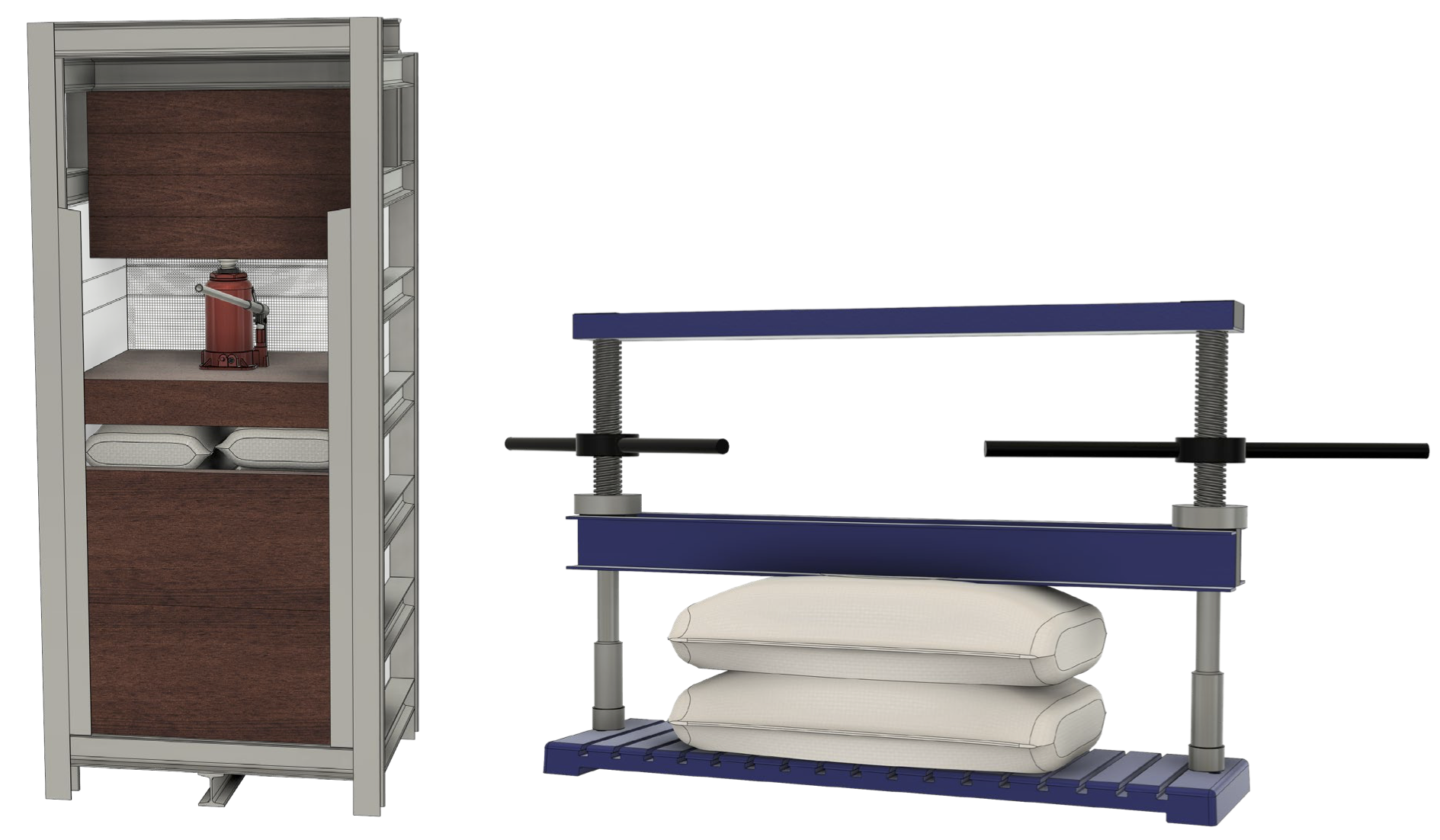
On the left you can see a diagram of such a press. However, applying too much pressure for too long can negatively affect the process, so the pressure needs to be monitored reliably.
Conventional Thinking
The client wanted an electronic pressure-measuring system for use in these environments.
The requirements were clear:
- Simple to use
- Reliable in demanding conditions
- Easy to repair
- Provide consistent pressure readings
- Low cost
At first glance, an electronic sensor combined with a controller board seems like the obvious answer. But once you consider pressure coming from different directions, wiring, power supply, maintenance and repairs, you quickly notice that you are unlikely to meet the requirements of simplicity and reliability.
Holistic Insight
The real challenge was not how to measure pressure using electronics, but how to obtain a reliable pressure measurement in a demanding environment.
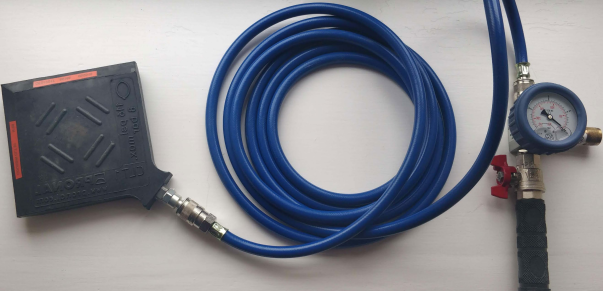
Instead of designing a bespoke electronic system, we proposed using commercial lifting bags combined with a simple pressure gauge (as shown on the left).
Outcome
By choosing something as simple as a lifting bag instead of electronics, the system can be operated by anyone, repairs remain simple and costs stay low, while reliability is high.
Revolving Door
Challenge
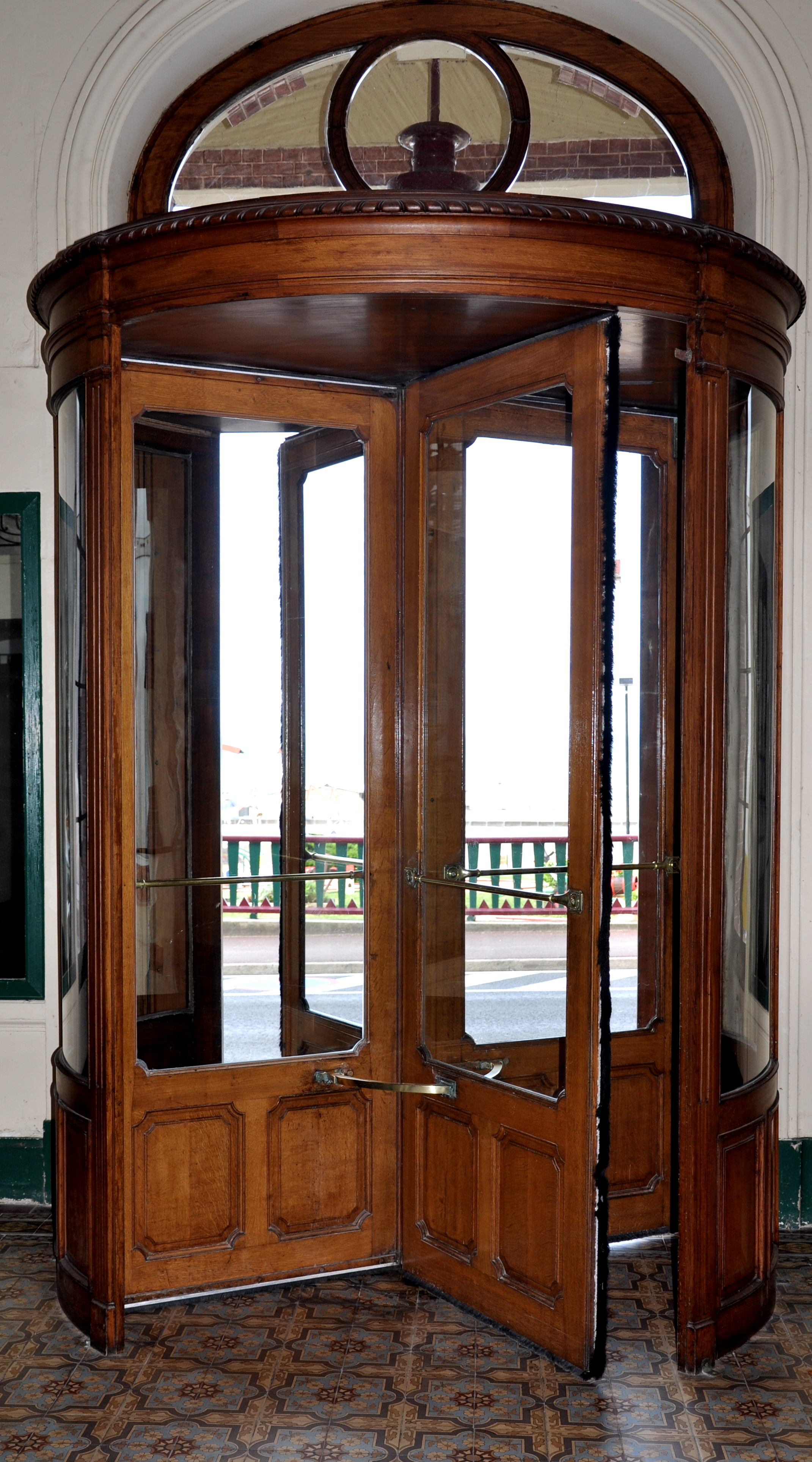
We were asked to measure the efficiency of the wind curtain installed on top of revolving doors on the inside of the building. Typically, these air curtains require about 7-8 kW and therefore a 3-phase supply is necessary, which can be hard to add in e.g. a historic building. The purpose of the measurement was to understand the actual energy consumption.
Conventional Thinking
Measuring the power consumption of the air curtain would not solve the consumption problem or the installation problem for historic buildings. Additionally, it would probably only confirm what was already on the equipment's label.
While it is possible to redesign the air curtain, most of the energy consumption comes from heat production, which cannot easily be reduced. Redesigning the airflow would have barely any impact, and is therefore also not an efficient way forward.
Holistic Insight
The real challenge was not measuring the efficiency of the air curtain. It was maintaining the indoor climate with far lower energy consumption while remaining suitable for historic buildings.
Once the problem had been reframed, it became clear that the air curtain has to go, while the challenge becomes how to maintain the indoor climate without it.
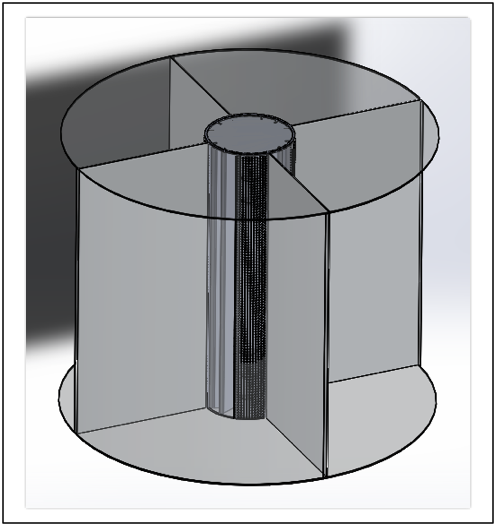
This can be achieved by redesigning the revolving door to move the air from the outgoing compartment so that it is swapped with the air in the ingoing compartment. If this can be done quickly enough, within the time that the door rotates, and with minimal power, then a working solution becomes possible.
Outcome
By redesigning the central column of the revolving door, air could be moved between the two closed off compartments as the door moves. To ensure this happened within the available timeframe, we added some fans to enforce the airflow. However, these require very little power. Our simulations demonstrated a minor loss of efficiency, which could easily be circumvented by adding a small heating/cooling element. Overall, the full system could be powered from a standard 13A socket.
The air curtain solution demonstrated a typical incremental approach to problem solving rather than questioning the fundamental challenge of how to achieve the best outcome. By returning to the fundamental question, the resulting concept required only a fraction of the original power while being compatible with a much wider range of buildings.
Cacao beans - Are they ripe ?
Challenge
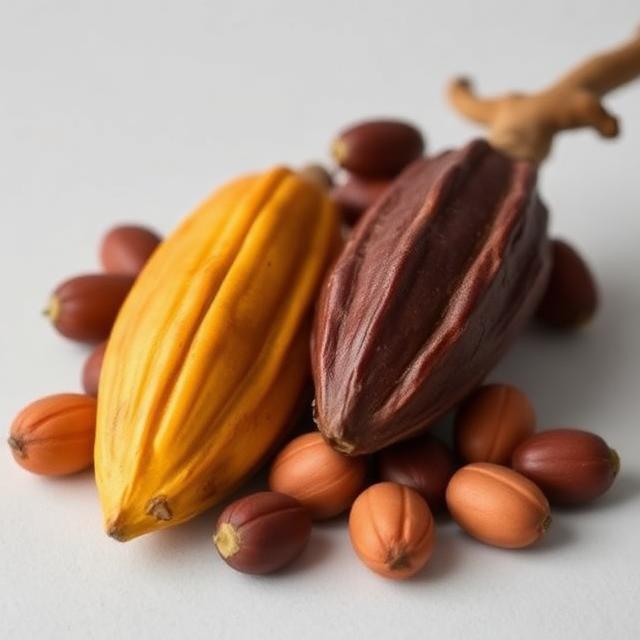
Many of us love our regular dose of chocolate, but have you ever wondered about the cacao beans that need to be harvested to make that possible ?
The challenge with harvesting these beans lies in identifying whether they are sufficiently ripe.
Conventional Thinking
Cacao beans change colour as they ripen, but it can be hard to know the exact colour that is associated with them being ripe, especially for less trained eyes. Harvesting too early can have a detrimental effect in many different ways. Those harvesting them, however, have little time to decide which ones are ready to harvest.
So, how do you help these harvesters make that decision quickly and reliably, without requiring a significant investment ?
From a technology perspective, using a camera and colour recognition comes with many challenges:
- Colours perceived by the camera change with lighting conditions;
- The camera will most likely look at more than one bean, but which one should it be judging;
- Cameras are large, fragile, and not suitable for the environments in which these plants are located.
Holistic Insight
The real challenge was to give harvesters a quick, reliable and low-cost way of determining whether a bean was ready to harvest under real working conditions.
Rather than relying on colour, we looked for another property that changes as beans ripen. Their moisture content changes as they ripen, and this can be measured through electrical conductivity. Simple and inexpensive moisture meters already exist, using two metal pins to measure electrical conductivity. The remaining challenge was to determine whether the pins could be positioned appropriately for the beans and establish the threshold that indicates ripeness.
Outcome
By measuring a physical property directly related to ripeness, the need for cameras, image processing and colour recognition disappeared entirely. The resulting solution is small, robust, inexpensive and well suited to the environments in which it will be used.
So next time you enjoy your chocolate, you might spare a thought for the simple technology that can help determine when cacao beans are ready to harvest.
River Strategy - Building Coherence between Stakeholders
Challenge
A local river strategy sought to engage a wide range of stakeholders. While considerable effort had gone into identifying interested parties, they had been grouped according to their individual interests. Each group was expected to develop its own priorities, while those leading the strategy were expected to bring these different perspectives together. However, there was no clear mechanism for doing so in a way that would create a coherent overall strategy.
Conventional Thinking
The focus was on ensuring that every stakeholder group had a voice.
The assumption was that if each group contributed its own ideas, a shared strategy would naturally emerge and that everyone would support it.
Holistic Insight
The challenge was not stakeholder engagement itself, but creating the conditions in which different stakeholders could develop a shared strategy.
Without first establishing common ground and a coherent strategic direction, each stakeholder group was likely to optimise for its own objectives, resulting in multiple competing strategies rather than one coherent direction.
The key insight was that without deliberately creating alignment around a common strategy, the process itself risked reinforcing fragmentation rather than collaboration.
The structure of collaboration and mechanism needed to be reconsidered to intentionally overcome these problems for long term success.
Outcome
By shifting the discussion towards developing a shared understanding of the underlying challenge before agreeing individual priorities, the conversation naturally moved away from competing stakeholder interests towards a common goal. As others recognised the same issue, the discussion became increasingly constructive, with participans beginning to explore how each stakeholder could contribute to a coherent overall strategy.
Explore our Demonstrations, Shared Resources, and Testimonials for more examples of our work in action and how we can help.
These case studies are only a sample of the challenges we can help with. Could yours be next ? Then get in touch.